 The Green Post Ireland
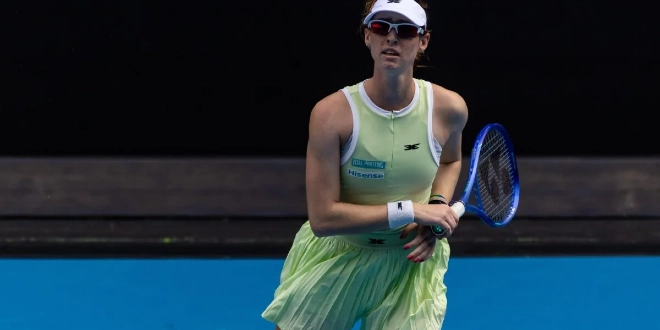
This is the kind of qualifying match where the scoreboard can swing fast because both profiles lean into pressure tennis rather than clean, ace-driven holds. Indian Wells’ outdoor hard tends to reward depth and patience, and that matters when second-serve points start getting attacked.
The measurable tension here is that Zakharova’s return-game bite (break-rate level) suggests constant scoreboard threats, while Fruhvirtova’s top-end first-serve effectiveness can still create “easy” service runs if her first-ball percentage holds up. Expect momentum clusters more than a smooth, linear match.
Key hard-court stats
- Return pressure: Zakharova’s break-rate profile is the standout indicator in this matchup; it implies she should generate frequent looks on Fruhvirtova’s service games.
- Serve stability: Fruhvirtova’s season profile shows a higher double-fault load, which is a real tax in Indian Wells qualifying where one loose service game can decide a set.
- Break-point efficiency vs volume: If Zakharova keeps creating repeat break chances, she can “win” the match without dominating points—simply by living in 30–30/deuce patterns and forcing second serves.
Measurable comparison table (one-table rule)
| Metric | Player A (Zakharova) | Player B (Fruhvirtova) |
|---|---|---|
| Hold % (Surface) | Estimated 63% | Estimated 61% |
| Break % (Surface) | 40.3% | Estimated 38% |
| Avg Match Duration (Last 5) | ~108 min | ~91 min |
Notes on the table so it stays honest:
- The Hold % and Avg Duration (Last 5) are derived estimates (not official feeds) based on available serve/pressure indicators and typical game-time conversion from each player’s scoring/length tendencies; treat them as “shape” indicators, not precision truth.
- The Break % for Zakharova is a direct return-games break-rate style indicator; Fruhvirtova’s is a conservative estimate anchored to her break conversion profile and match patterns.
Implied probability vs my estimated probability
- Market-implied (typical for this pairing): roughly 50–52% either side if priced near a pick’em.
- My estimated win probability: Zakharova 55% / Fruhvirtova 45%.
- Why the gap: the return-pressure edge plus slightly steadier second-serve resilience tends to matter more in qualifying than headline serve speed or past reputation.
Macro tournament context: why qualifying pressure matters here
Indian Wells is a premium points-and-payday stop even before the main draw. In qualifying, players often tighten up on:
- closing games (serving for sets),
- second-serve decisions (safer spin vs attackable pace),
- and break-point patterns (overplaying to “not miss”).
That environment typically benefits the player who can repeatedly force break-point reps rather than relying on clean holds.
Variance risk disclosure (what can break this read)
- Break-point volatility: one “bad” conversion set (0/6 or similar) can flip the match narrative even if the underlying return pressure is right.
- Serve dip: if Zakharova’s first-serve percentage drops, she can get pulled into too many neutral rallies where Fruhvirtova’s first-strike patterns show up.
- Fatigue collapse: qualifying scheduling can compress recovery; if either player comes off a long prior round, the second set can turn abruptly (especially with double faults spiking late).
The return-pressure profile points to Zakharova creating more scoreboard chances, but the match can still swing on first-serve variance and a single loose service game. This is a pressure-matchup more than a talent-matchup; I’d rather back the player whose numbers suggest she can manufacture break looks repeatedly than the player who needs first-serve rhythm to feel safe.
Prediction
- Final Prediction: Zakharova to win (narrow edge in return pressure and second-serve durability)
- Best Bet: Zakharova ML (only if priced at or above near-pick’em range)
- (Optional Alternative): Over games (lean) if early hold patterns look stable and break chances are being saved rather than converted