 The Green Post Ireland
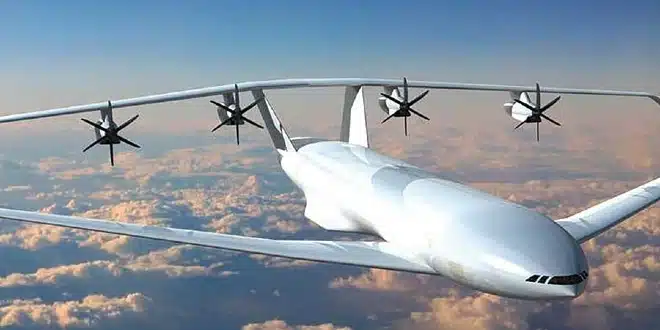
Composite materials are already utilized in various applications such as boat hulls, cars, and wind turbine blades.
But what about airplanes?
With the growing emphasis on reducing plastic consumption through reusable and recyclable packaging, and initiatives like the Deposit Return Scheme, it’s worth considering if certain types of plastics could help reduce carbon emissions. For example, can plastics be used to make airplanes lighter and more fuel-efficient?
Plastics are made from polymers, which could potentially aid in carbon reduction. On their own, polymers may not be strong enough for safe air travel. However, by reinforcing the polymer with continuous fibers, similar to how steel reinforces concrete, the material’s properties change.
Continuous fibers, like carbon fibers, when integrated with polymers, significantly increase their strength. These materials, known as composite materials, are already used in various sectors, including boat hulls, cars, and wind turbine blades. This raises the question: why aren’t composites more widely used in aviation? The fact is, they are, but further development is necessary to fully harness their potential in aerospace applications.
The typical process for creating aviation-grade components involves precisely layering thin composite sheets on top of each other. This stack is then consolidated into a laminate using heat and pressure in an autoclave, a large oven similar to a pressure cooker but potentially the size of two double-decker buses.
While autoclave manufacturing can produce high-quality aerospace components, it has drawbacks
The process is slow, sometimes taking up to 12 hours to consolidate composite parts. It also has a high energy demand due to the heating required for consolidation and uses significant amounts of disposable materials. Additionally, this process is mainly suitable for relatively thin components like skin and wing panels. Therefore, alternative manufacturing systems and polymer materials may be the next steps in composite development.
Thermoplastic polymers offer the possibility of manufacturing composite components without an autoclave. While thermoset polymer composites are commonly used to create large components without requiring high processing temperatures, an autoclave is still necessary. For thermoset composites, increasing the temperature speeds up a chemical reaction that turns the polymer from a glue-like substance to a solid part that cannot be reshaped.
In contrast, heating a thermoplastic composite melts the polymer, and it solidifies again upon cooling. Since there is no chemical reaction, thermoplastic polymers are considered recyclable. This property introduces the potential for composite component manufacturing without an autoclave.
The absence of a chemical reaction means the composite does not need to remain above the melt temperature for long periods, only long enough to bond each layer. This enables a more time-efficient and energy-efficient manufacturing process.
An example of an advanced manufacturing process is the automated tape placement system
The system includes a high-power heat source and a robotic arm. This system places the composite layers that form the component, eliminating the need for hand lay-ups.
The heat source locally heats the polymer above the melt temperature, and a roller applies pressure to bond the layers, creating the composite laminate. The material then rapidly cools, solidifying into a composite component. This cycle continues until the desired component geometry is achieved. This method avoids the size and energy limitations of autoclave manufacturing and allows for the creation of larger parts.
Despite its advantages, the automated tape placement system currently cannot produce components of the same quality as those made in an autoclave. However, it serves as a starting point for aircraft-safe composite component manufacturing, with post-processing in an autoclave still required. Ongoing research aims to eliminate the need for post-processing, resulting in lower production and energy costs for aircraft-safe composite components. Additionally, this would lead to more fuel-efficient aircraft with reduced CO2 emissions.
While airplanes are unlikely to be made entirely of plastic in the future, fiber-reinforced polymer composites will play a significant role in aviation.