 The Green Post Ireland
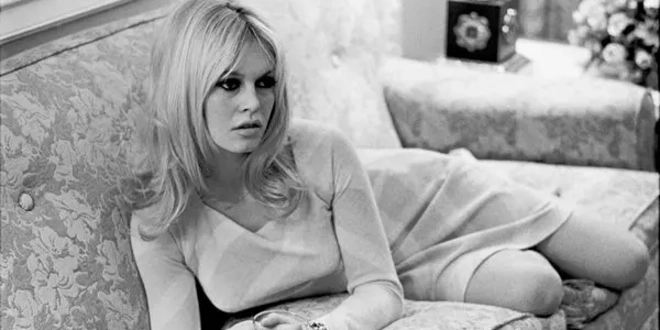
Brigitte Bardot, the French actress and model who rose to global fame in the 1950s before abandoning the spotlight to devote her life to animal welfare, has died at the age of 91, according to an announcement by her foundation.
In a statement shared with AFP, the Brigitte Bardot Foundation said it was mourning the loss of its founder and president, describing her as an extraordinary figure who chose to walk away from a celebrated film career in order to dedicate herself fully to the protection of animals. The statement did not specify when or where she died, but emphasized that her values and legacy would live on through the foundation’s continued work.
From cinematic sensation to global icon
Bardot became an international star in 1956 with her breakthrough role in And God Created Woman, a film that shattered conventions and redefined female sexuality on screen. Her barefoot dance scenes, untamed hair and raw energy made her an emblem of liberation and a symbol of post-war cultural change. Over the following years, she appeared in roughly 50 films, becoming one of the most recognisable faces of European cinema.
Born in Paris on 28/09/1934, Bardot grew up in a comfortable but strict household and later described herself as a withdrawn and insecure child. By her mid-teens, however, she had already graced the cover of Elle magazine, launching a modelling career that quickly transitioned into acting. At just 21, she captivated audiences and scandalised critics, ushering in a new era of screen femininity.
Her influence stretched far beyond France. Artists and intellectuals across the world responded to her image, from Andy Warhol, who painted her portrait, to Bob Dylan, who reportedly wrote a song inspired by her while still a teenager. Philosopher Simone de Beauvoir famously praised Bardot as the embodiment of authentic freedom, arguing that her refusal to conform was her greatest strength.
Despite the acclaim, Bardot struggled deeply with fame. She later spoke of feeling imprisoned by celebrity, unable to live a normal life. Her personal history included four marriages, widely publicised relationships, and recurring battles with depression. She survived at least one suicide attempt in her twenties, and another incident later in life raised similar concerns.
Alongside acting, Bardot also enjoyed a successful music career, notably collaborating with Serge Gainsbourg on songs that provoked both fascination and controversy, including Je t’aime… moi non plus. In the late 1960s, her face was chosen as the model for Marianne, the symbolic figure of the French Republic, cementing her status as a national icon.
A radical break and lifelong devotion to animals
In a decision that stunned the entertainment world, Bardot announced in 1973 that she was retiring from cinema at the age of 39. Disillusioned with the film industry, which she later described as morally hollow, she withdrew from public life and settled near Saint-Tropez on the French Riviera.
Her commitment to animal welfare became the defining mission of her later years. Bardot often traced this calling to an incident on the set of her final film, when she rescued a goat destined for slaughter and kept it in her hotel room. From that moment, she said, her priorities shifted entirely.
In 1986, she founded the Brigitte Bardot Foundation, which went on to campaign internationally against animal cruelty, supporting causes ranging from anti-whaling efforts to opposition to factory farming and the use of animals in entertainment. She famously auctioned personal belongings to fund the organisation and repeatedly threatened to leave France in protest over animal welfare decisions.
Living largely in seclusion behind high walls in Saint-Tropez, Bardot surrounded herself with animals, finding purpose and peace away from the public eye. “I gave my youth and beauty to men,” she once said. “I give my wisdom and experience to animals.”
Controversy, convictions and an enduring legacy
As her activism intensified, Bardot’s public statements increasingly sparked controversy. Her remarks on immigration, Islam and social issues led to multiple convictions for inciting racial hatred, with French courts fining her several times between the late 1990s and 2000s. Her marriage to Bernard d’Ormale, a former adviser to the far-right National Front, and her public support for figures such as Jean-Marie and Marine Le Pen further polarised public opinion.
Yet even critics acknowledged her lasting impact. Bardot remained a touchstone in fashion, cinema and popular culture, with her hairstyle, style and image repeatedly revived by new generations. Documentaries, exhibitions and books continued to explore her influence long after she withdrew from public life.
In one of her final televised interviews, she dismissed the idea that she represented feminism or the sexual revolution, saying she had simply lived according to her instincts. She also expressed little nostalgia for her film career, noting that its true value lay in giving her a platform to advocate for animals on a global scale.
French President Emmanuel Macron paid tribute to Bardot following news of her death, calling her “a legend of the century” and praising the freedom she embodied throughout her life.