 The Green Post Ireland
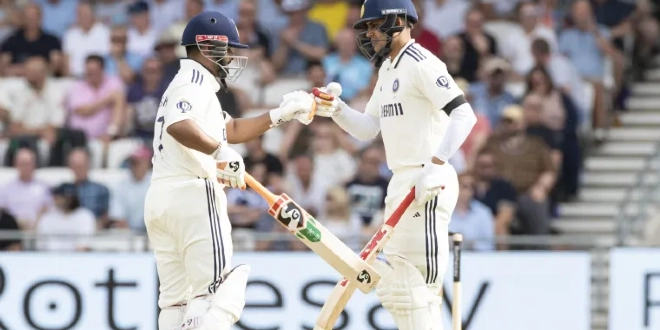
T20 knockout matches often swing around two overs rather than two sessions, and the England vs India clash sits exactly in that tension. Recent scoring patterns suggest both teams can push above a 9.0 run rate during their best phases, but the difference frequently appears at the death where bowling discipline matters. In conditions typical of subcontinental evening games, totals around 165–175 remain competitive but not safe.
The analytical angle is phase control: England’s aggressive powerplay scoring versus India’s more stable wicket pressure and stronger late-overs containment.
Phase efficiency comparison
The recent five-match trend lines show England attacking earlier in the innings, often clearing the infield aggressively in the first six overs. India, meanwhile, tends to build pressure through middle-overs wicket-taking and tighter closing overs.
Measurable indicators used:
- Run rate (Last 5 matches)
- Powerplay scoring rate
- Death overs economy
- Additional anchor: Wickets per match
| Phase | Team A (ENG) | Team B (IND) |
|---|---|---|
| Powerplay Run Rate | 9.95 | 9.10 |
| Death Overs Economy | 9.7 | 8.8 |
| Wickets per Match | 6.2 | 7.3 |
England’s early scoring advantage gives them higher ceiling potential, but India’s stronger death overs economy suggests they limit explosive finishes better. In knockout T20, that balance often determines whether a 165 total becomes defendable or collapses late.
Pitch angle and macro format context
T20 World Cup knockout matches tend to compress scoring windows because teams manage risk differently. Batting sides rarely attempt reckless acceleration early unless the pitch is extremely flat. Instead, the pressure often moves into overs 7–15 where spin and cutters slow the scoring rate.
If the surface slows slightly as expected, India’s bowling structure benefits because they rely on middle-overs control and disciplined death bowling rather than pure pace intimidation. England, however, still hold a strong upside if the pitch remains true through the powerplay and they cross 55–60 runs in the first six overs.
Market perspective and probability edge
Typical market range:
- India win @ 1.72
- England win @ 2.15
Implied probabilities:
- India: 58.1%
- England: 46.5%
After margin adjustment, fair probabilities land roughly around:
- India ≈ 55%
- England ≈ 45%
Estimated probability from phase indicators:
- India ≈ 57%
- England ≈ 43%
This leaves a narrow but real edge leaning toward India due to their stronger wicket-taking and death-overs discipline.
Toss impact
If chasing becomes easier under lights, the toss can swing win probability by several percentage points because teams can pace the chase around a target rather than guess the par score.
Dew factor
Heavy dew reduces spin effectiveness and increases boundary conversion, which tends to favor aggressive chasing teams.
England’s attacking style occasionally creates short collapse windows. If two wickets fall inside one over during the middle phase, scoring momentum can vanish quickly.
In T20 knockouts the decisive advantage usually comes from the side that combines wicket pressure with controlled death bowling, not simply the team that scores fastest early.
Final Prediction
- Final Prediction: India to win a competitive match driven by stronger bowling control in the final overs.
- Best Bet: India to win.
- (Optional Alternative): Under match total runs if the pitch shows early grip and slows during the middle overs.